
Transitions
‘I Don’t Want to Go’: Helping a Child Who Resists a Handover
My Calm Pack · 3 min read
In brief
Resistance before a handover can reflect unfinished play, missing you or difficulty with the transition itself. Listen without jumping to conclusions, offer familiar steps and take any signs of fear or harm seriously.
‘I don’t want to go’ can be painful to hear. One parent may feel rejected; the other may wonder whether something is wrong. For a child aged two to seven, those words can hold several meanings. They deserve attention without an immediate adult conclusion.
Sometimes the difficulty is leaving a game, saying goodbye or moving between routines. Sometimes there is a specific worry about the other home. A familiar transition routine can help, but it should never replace listening or checking safety.
Start by slowing the moment down
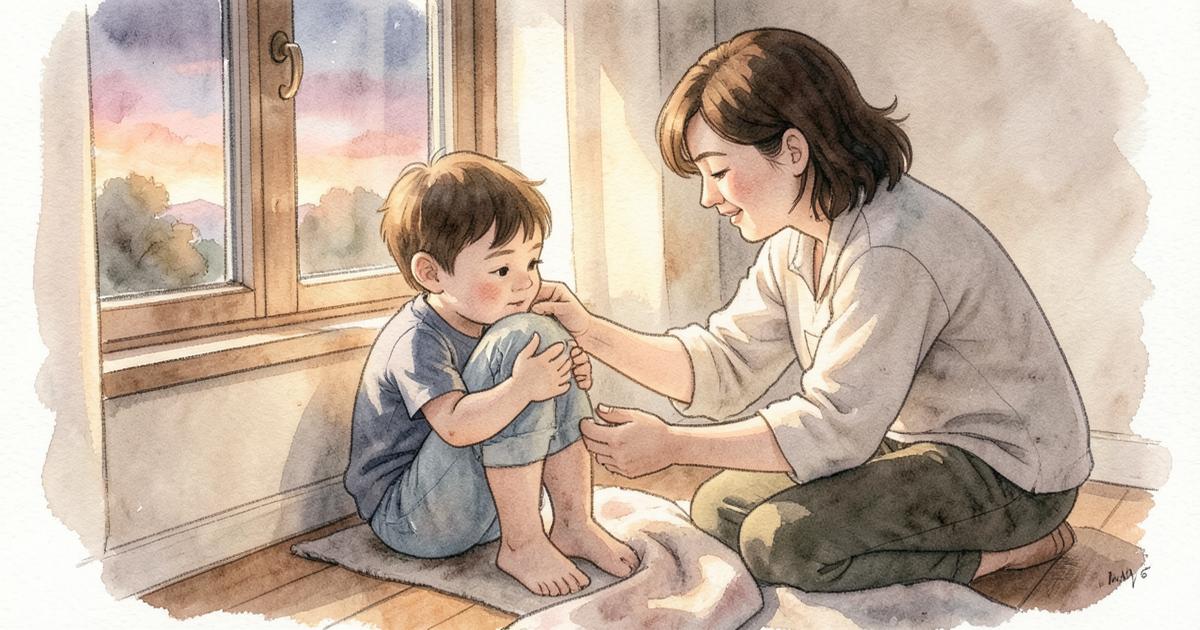
Get close enough to speak quietly. Try: ‘You don’t want to leave right now. I’m listening.’
Give your child a little space to respond. One open invitation, such as ‘Tell me about that,’ is more useful than a string of questions suggesting answers.
If they cannot explain, do not insist on a reason at the door. Young children may not have the words, especially when upset. You can return to the conversation during calm play or another ordinary moment.
Consider what is hard about leaving
Look at the circumstances rather than treating resistance as a verdict on either parent:
- Was your child interrupted in the middle of something absorbing?
- Are they hungry, tired or rushed?
- Is the collection time or place unpredictable?
- Are they worried about when they will see you again?
- Have they mentioned something specific that concerns them?
Noticing patterns can help you respond. It does not prove why your child is resisting.
Use familiar steps when the arrangement is safe
Give a concrete warning: ‘After we finish this puzzle, we will pack your bag.’ Avoid starting an exciting activity just before leaving where possible.
At departure, use a short sequence: shoes, bag, goodbye, journey. Say what happens next: ‘Dad is collecting you now. I will see you after nursery tomorrow.’ Only describe plans that are confirmed.
Offer a small choice within the routine: ‘Would you like to carry the book or put it in your bag?’ Do not ask your child to decide the parenting arrangement.
Acknowledge tears without promising they will stop: ‘Saying goodbye feels hard. You can be sad, and I will help you with your shoes.’ Avoid bribes or physically forcing a distressed child through a handover.
Keep adult discussion separate
Do not debate the meaning of your child’s words in front of them. If you need to share a pattern, do so factually and safely: ‘The last three departures have involved tears. Can we review the timing?’
If your child describes harm, listen calmly. Do not interrogate, suggest details or promise secrecy. Record their words accurately and seek safeguarding advice. Do not assume a routine will resolve a safety concern or pressure them to show affection.
When to seek professional help
Seek advice if resistance increases, happens repeatedly or comes with persistent stomach aches, sleep changes or marked fear. A child health professional or qualified child psychologist can help explore the pattern. If abuse, unsafe care or immediate danger is suspected, seek prompt safeguarding or emergency support and urgent advice about safe arrangements rather than treating the problem as ordinary transition distress.
About this article
Prepared by My Calm Pack, a project created from a family’s lived experience of life between two homes. This is practical, everyday information, not therapy or medical advice, and does not replace professional support for your family.
Share this article