
Transitions
Big Feelings After Returning from the Other Parent’s Home
My Calm Pack · 3 min read
In brief
Tears, clinginess or irritability after a handover can have several causes. A quiet welcome, clear limits and attentive listening give your child room to settle without jumping to conclusions.
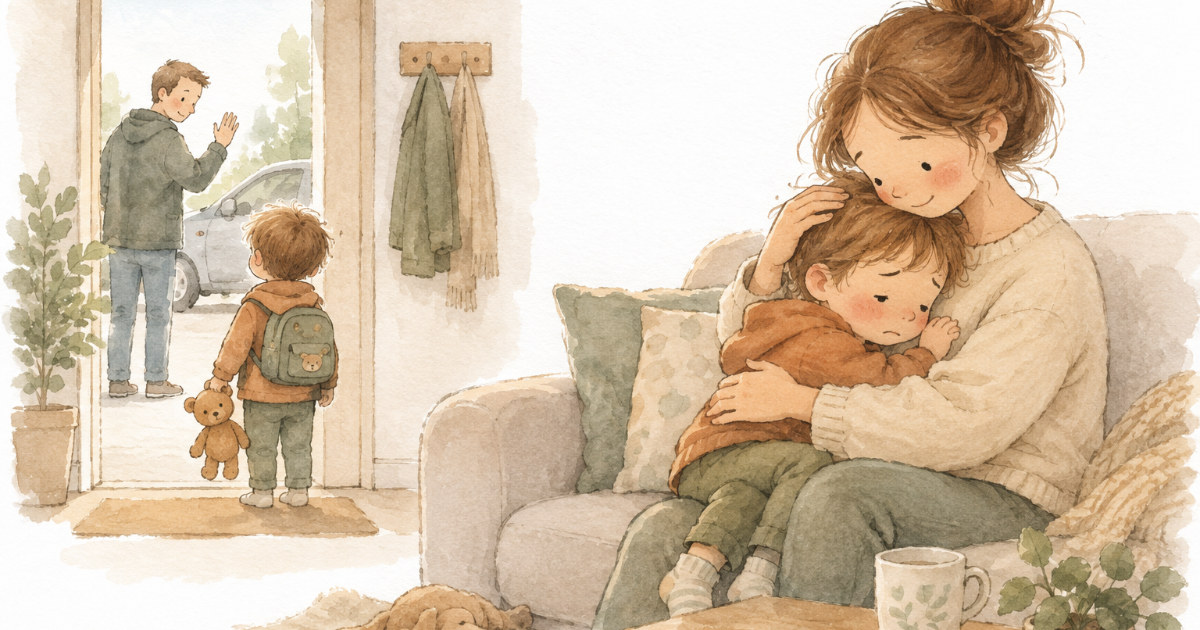
Your child comes home and everything seems difficult. They cry over a snack, refuse to get dressed or follow you from room to room. It is understandable to wonder what happened while they were away.
A change in behaviour after a handover does not, by itself, explain what happened in the other home. Moving between places can be tiring, and your child has just said goodbye to someone too. Stay curious about their needs without immediately blaming another parent—or dismissing a possible concern.
Consider more than one explanation
Different surroundings, routines and expectations can take effort to navigate. Your child may also be hungry, tired, overstimulated or sad about leaving the other parent.
Some children release strong feelings when they are back with a familiar caregiver. However, difficult behaviour is not proof that one home feels safer than the other. Look at the whole picture, including what your child says, how long the change lasts and whether there are other signs of distress.
Create a low-pressure welcome
Try keeping the first part of the return familiar and quiet:
- Offer a drink and a simple snack.
- Help put the bag down and find a favourite belonging.
- Offer calm play, a story or nearby company.
- Leave optional errands and busy activities for another time when possible.
You do not need to organise a perfect settling hour. A short period with fewer demands may be enough. Some children want a cuddle; others need space while knowing you are available.
Say: ‘You’re home. We don’t have to rush. Would you like me beside you or over here?’
Welcome feelings while keeping limits
Understanding distress does not mean allowing hurting or breaking things. Keep the limit brief and help your child through it.
For example: ‘You’re angry. I won’t let you hit me. I’m moving back, and I’ll stay nearby.’ Save explanations and problem-solving until your child is calmer.
Avoid treating the return as an interrogation. Instead of ‘What did they let you do there?’, try an open invitation later: ‘Is there anything you’d like to tell me about your time away?’ It is also fine if your child simply wants to play.
Notice patterns without building a case
If difficult returns keep happening, note practical details such as timing, sleep, food and how long settling takes. Where communication is safe, discuss observations neutrally: ‘The last few returns have been hard. Could we compare sleep and meal timings?’
Do not ask your child to report on the other household. If they share something worrying, listen calmly, avoid leading questions and take their words seriously. Distress should not automatically be explained away as transition fatigue.
Where there is intimidation, abuse or unsafe contact, use established safety arrangements and professional advice rather than direct negotiation.
When to seek professional help
Speak with your child’s doctor or a qualified child mental health professional if distress persists over several weeks, worsens or affects daily functioning. Repeated pain, sleep difficulties, marked fear or a concerning disclosure deserve attention sooner. Seek immediate safeguarding or emergency assistance if you believe your child is in danger.
About this article
Prepared by My Calm Pack, a project created from a family’s lived experience of life between two homes. This is practical, everyday information, not therapy or medical advice, and does not replace professional support for your family.
Share this article