
Co-parenting
Calm Communication After Separation: Keeping Children Out of Conflict
My Calm Pack · 3 min read
In brief
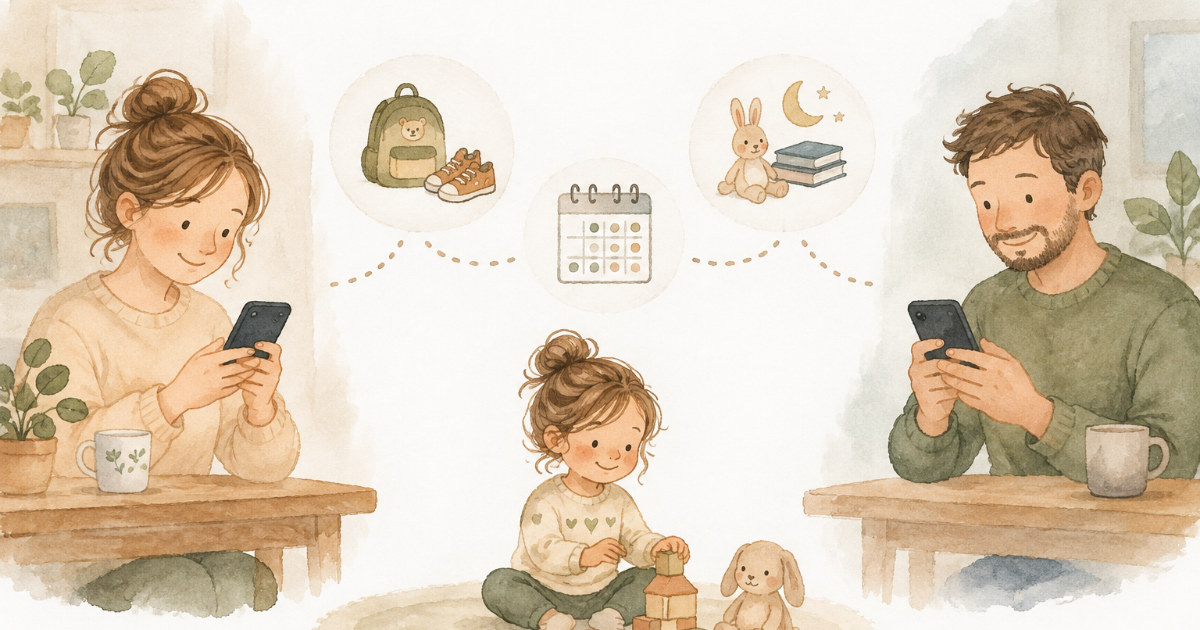
Parents do not have to be friends to keep everyday communication focused on their child. Short messages, clear arrangements and adult-to-adult conversations can reduce the burden on young children.
After separation, even a conversation about a forgotten coat can carry old hurt. You do not have to resolve the relationship before discussing your child’s needs. The immediate aim is smaller: exchange useful information without asking your child to carry the tension.
Children aged two to seven may notice strained voices, silences or changes in expression without understanding them. Clear boundaries around adult communication give them less to interpret and manage.
Keep three boundaries in mind
Not through your child. Send messages yourself rather than saying, ‘Tell Mum she needs to…’ Your child should not have to remember an instruction or handle the response.
Not within hearing. Discuss disagreements away from your child, including phone calls they might overhear. The doorstep is rarely a useful place to resolve a dispute.
About the next practical step. Keep routine exchanges focused on care, collection times, health and school rather than the history of your relationship.
These boundaries apply to both parents. They are not a requirement to be warm or friendly; polite and factual is enough.
Write a message that is easy to answer
Use a simple structure: relevant fact, practical request, necessary timing.
For example: ‘Ella has been finding bedtime difficult this week. A story and her rabbit have helped. Please pack the rabbit for Friday’s collection at 5.’
Or: ‘Nursery needs a white T-shirt on Wednesday. I will put one in the bag. Please confirm you have seen this.’
Avoid sarcasm, accusations and several unrelated issues in one message. If you feel angry, draft the message and reread it before sending, unless something needs immediate attention.
Agree on a channel for ordinary arrangements and a separate way to flag genuinely urgent health or safety information, where safe and feasible.
Agree on a few useful essentials
Identical homes are not necessary. Focus first on arrangements your child needs to understand:
- Where and when collections happen.
- Who communicates changes to nursery or school.
- Important health information and care instructions.
- A few familiar bedtime steps, if practical.
Keep agreements specific. ‘Collection at the nursery entrance at 4’ leaves less uncertainty than ‘Come around the usual time.’ Review arrangements away from your child.
Protect your child’s freedom to care
Try: ‘That is for the grown-ups to organise. You do not need to pass messages.’ If they worry about your mood, add: ‘My feelings are not your job to fix.’
Let your child talk about ordinary experiences with the other parent without asking them to report on that household. Listening is different from gathering information through them.
When direct cooperation is not safe
Threats, stalking, coercive control or abuse are not simply communication problems. More contact or a friendlier tone may not be safe. Specialist advice may be needed about documented communication, supported handovers or other protective arrangements. Follow relevant orders and safeguarding guidance; mediation is not suitable for every situation.
When to seek professional help
Seek support if conflict repeatedly reaches your child, or they seem responsible for keeping adults calm. A family professional may help with boundaries; mediation may be an option only where safe and appropriate. For intimidation or abuse, contact a specialist domestic abuse or safeguarding service. Use emergency services if anyone is in immediate danger.
About this article
Prepared by My Calm Pack, a project created from a family’s lived experience of life between two homes. This is practical, everyday information, not therapy or medical advice, and does not replace professional support for your family.
Share this article