
Everyday Life
A Two-Home Calendar: Planning the Next Two Weeks
My Calm Pack · 3 min read
In brief
A simple visual plan can help your child see where they will sleep and what happens next. Start with confirmed arrangements, familiar symbols and only as much detail as they need.
Make your child's two-home calendar
Add your child's name and a start date, mark which home each day is in, choose a few simple activities, then download a printable PDF.
Would you like more practical ideas for helping your child feel calm in two homes?
Email is optional — you can make your calendar for free without it.
‘Where am I sleeping tonight?’ can be an important question for a child living between two homes. A simple calendar gives you something to look at together, so your child does not have to hold the whole plan in their head.
For children aged 2–7, keep the plan concrete and manageable. Two weeks may be useful for adults and some older children, while a younger child may only need help understanding today and tomorrow. You can make a simple version using ordinary paper and whatever drawing materials you already have.
Start with arrangements you know
Before involving your child, write down the confirmed plan for the next fourteen days. Include where they will sleep, who will collect them and any regular nursery or school days.
A calendar should explain arrangements, not ask your child to choose between parents. Avoid filling uncertain days with guesses. If something is undecided, say: ‘The grown-ups are still arranging Thursday. I’ll tell you when we know.’
Where possible and safe, adults can check practical details directly rather than relying on the child to carry information between homes.
Make the plan easy to recognise
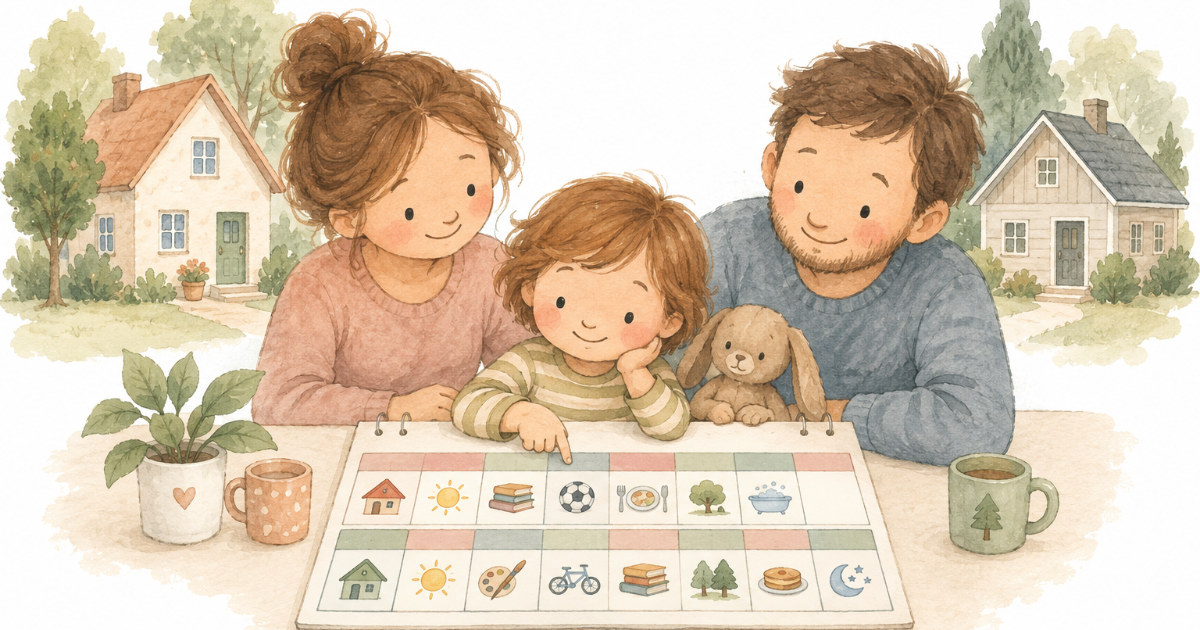
Draw fourteen spaces, arranged in two rows of seven. Add dates for your own reference, then use a few symbols your child understands:
- A simple picture to show each home.
- A bed to show where they will sleep.
- A nursery or school symbol on relevant days.
- One familiar activity, such as a bedtime book, if useful.
Let your child help choose symbols without making either home the ‘good’ or ‘bad’ colour. Keep the page uncluttered. It does not need to describe every meal, journey or activity.
Talk about the next small step
Look at the calendar briefly at a predictable time, perhaps after breakfast. Point to today and explain the next event in everyday language.
For example: ‘Today is a nursery day. Dad will collect you after snack, and you’ll sleep at his home.’ For a younger child, this sequence may mean more than ‘It’s Wednesday.’
An older child might enjoy moving a paper marker to the current day. Participation is optional; the calendar should not become a daily test of memory or understanding.
Leave space for changes and feelings
Plans sometimes change. Update the calendar visibly and explain what is different: ‘We planned for Mum to collect you. Today, Grandpa will collect you instead.’ Keep explanations short and avoid blaming another adult.
A clear plan cannot remove sadness or uncertainty. Your child may understand exactly what is happening and still miss someone. Try: ‘You know where you’re sleeping, and you wish you could see Mum tonight.’ Both things can be true.
If displaying the schedule creates a safety or privacy risk, keep it somewhere secure. Follow relevant contact arrangements rather than using a calendar to override them.
When to seek professional help
Ask your child’s doctor or a qualified child mental health professional for advice if worries about the schedule persist or disrupt sleep, eating or daily activities. For unsafe contact, coercion or disputed arrangements, seek appropriate safeguarding or legal guidance. A visual plan can clarify information, but it cannot resolve safety concerns or adult disputes.
About this article
Prepared by My Calm Pack, a project created from a family’s lived experience of life between two homes. This is practical, everyday information, not therapy or medical advice, and does not replace professional support for your family.
Share this article